Sharing KNOWLEDGE + EXPERIENCE about COLOR

  • Research 
  • Design/Arts 
  • Industry
  • Education

The Color Council (ISCC) is the principal interdisciplinary society in the United States dedicated to advancing color research and best practices in industry, design/arts and education.

Become a Member

Upcoming Events

    • 20 Feb 2026
    • 11:00 AM - 12:00 PM
    • virtual
    • 208
    Register

    WHO University students and faculty
    WHEN     
    Friday February 20, 2026, 11AM EST

    How do we communicate about colour across languages and viewing conditions? Our research team at Northeastern University London investigates how speakers of different languages carve up colour space in context. In this Fluorescent Friday event, you will hear from three Colournamers: Akvile will demonstrate Colour Spinner, an interactive tool for exploring colour naming across six languages; Rafique will reveal why current AI systems struggle with colour naming despite their linguistic sophistication; and Beata will show how the colours around us interact and shift the colours we perceive and name.

    The information below is edited for brevity. The complete abstracts and bios for all talks are available in this PDF.


    Presenters (left to right):

    Dimitris Mylonas, Associate Professor in Data Science

    Introduction

    Akvile Sinkeviciute, PhD Student

    Title: Colour Spinner: An Interactive Tool for Multilingual Colour Communication

    Rafique Ahmed, PhD Student

    Title: Colour understanding in AI models

    Beata Wozniak, Postdoctoral researcher

    Title: Colour naming in context

    FLUORESCENT FRIDAYS is a platform for university students from all disciplines to network with color professionals and fellow students, and to explore cutting-edge information about color’s role in our lives and applications in the world. 

    Global Student Chapter: The long range goal is to build a global student chapter that positions color as a multidimensional STEAM model (Science, Technology, Engineering, Arts, Math), sharing up-to-date color research by scientists, artists, designers, industry professionals, and university students.21st century color communication requires a commitment to building bridges for sharing resources, cultivating mentors, and creating new opportunities. With up-to-date information and useful tools, students become the next generation of leaders in ever-evolving color related disciplines.

    • 19 Mar 2026
    • 2:00 PM - 3:00 PM
    • virtual
    Register

    A Vibrant Violet Revelation: Van Gogh’s Irises through the lens of Color Science

    Recent scientific examination of Van Gogh’s Irises revealed that the painting’s iris flowers, which today appear blue, were once purple. A key finding of the study was the identification and mapping of the light-sensitive red pigment geranium lake, which was mixed with three blue pigments—cobalt blue, ultramarine, and Prussian blue—to create the various shades found in the irises. When initially applied, the mixture of red geranium lake with the blue pigments would have created shades of purple. But, how purple?

    A team of conservators, scientists, and imaging specialists collaborated to create a 1:1, 3D physical reconstruction of how the painting may have originally appeared. Optical microscopy of a cross-section sample revealed a glimpse of the unfaded purple paint mixture shielded beneath the surface. However, reimagining the full range of purples could not be simply extracted from this single visual point of reference.

    To address this, we turned to color science. By modeling the optical properties of the unfaded pigment mixtures (as determined from chemical analysis), we created a series of tone palettes with known relative pigment concentrations—similar to paint swatches from a hardware store. These palettes bracketed the gamut of purples Van Gogh could have reasonably mixed up. Starting with the relative amounts of geranium lake and blue pigments observed in each paint stroke, we selected ranges of purple tones from the palettes and recolored the brush strokes accordingly. The result: vibrant purple irises with intricately gradated tones, rendered through scientific modeling and applied with artistic sensibility.

    This lecture will discuss how the interdisciplinary team linked the scientific and aesthetic understanding of the faded flowers, enabling effective communication and consensus on “how purple” the irises originally were.

    Speaker bio:

    Olivia is the Lead Technical Imaging Specialist in the Getty’s Digital Imaging Department (GDID), where she guides Getty-wide advanced imaging initiatives to improve the capture, management, and dissemination of scientific imaging data. Her focus on optimizing technical imaging workflows across GDID’s photography studios is enhancing how Getty supports imaging for Open Science, Open Content, and computational cultural heritage efforts, and emphasizes the new avenues that spectral imaging techniques and technologies provide toward these efforts.

    Prior to this role, Olivia was an Assistant Scientist at the Getty Conservation Institute, where she conducted technical studies on works of art to address questions of composition, artistic practice, and material degradation. Her projects there also focused on imaging, in particular, on expanding the Institute's capabilities in hyperspectral imaging and incorporating it with other scientific imaging modalities, such as macro X-Ray fluorescence scanning.

    Olivia earned a PhD in color science from Rochester Institute of Technology, as well as MS and BS degrees in chemistry from RIT and Penn State, respectively.


    • 27 Mar 2026
    • 4:00 PM - 5:00 PM
    • virtual
    • 38
    Register

    Colorful Connections is an opportunity to gather informally with other members of ISCC for a little socializing, networking and learning from each other. Discussions are wide-ranging and depend on attendees, their current interests and past experience. Consider this the online version of coffee breaks and happy hours at a color conference. BYO coffee or beverage and join in the conversation! 

    Note that this is Members Only event. Not a member, no problem - Join here!

 NEWS!

Deadlines for our Student Support Grant are May 15 and October 15 of each year. This grant is designed to assist undergraduate and graduate students with activities pertaining to colorDetails and application forms here.


Grow your color knowledge

Learn and connect with color professionals through our events, resources, and programs!


The Colour Literacy Project is an educational initiative to strengthen the bridge between art and science in 21st century colour education.

This project provides foundational, state-of-the-art resource within a STEAM framework. Teaching guides available for free download.

VISIT COLORLITERACY.ORG


Join students from all disciplines and network with color professionals. Discover state-of-the-art information about color in our lives and applications in the world. New episode every month. One-hour presentation on topics such as branding, architecture, paint, and more.

MORE ABOUT FLUORESCENT FRIDAYS


Consider this the online version of coffee breaks and happy hours at a color conference. BYO coffee or beverage and join in the conversation!

Socialize, network, and learn! Discussions are wide-ranging and depend on attendees, their current interests and past experience.

REGISTER FOR THE NEXT ONE


A deeper dive into a range of topics related to color. 

BOLD: Color from Test Tube to Textile

Presented by Dr Elisabeth Berry Drago, Director of Visitor Engagement at the Science History Institute. Recorded January 23, 2024.


We are sharing this webinar to non-members for free. Visit this link and enter your name and email address. 


A Look Inside Our Quarterly:

Join the Color Council to receive the entire publication!


Diffusion Material for Luminous Mosaic Images

In this editorial, Richard Travis presents a follow-up to his 2021 pair of articles about color education and additive color mixing, which also serves to remind us all to have a look at both of his preceding works.

Read more>>


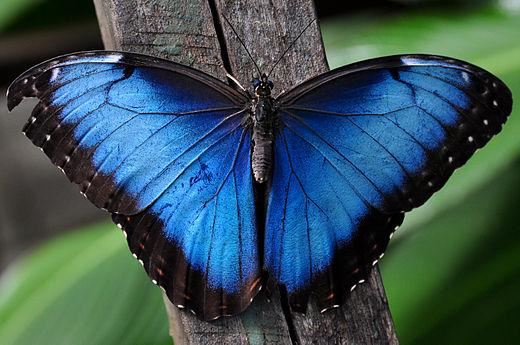
Blue Morphos Have a Cool Color

I first encountered the blue morpho in Kai Kupferschmidt’s book, Blue: In Search of Nature’s Rarest Color, which I reviewed in Issue 504 of ISCC News. There I learned about a tricky problem that the butterfly appears to have solved through natural selection. Interference patterns can lead to brilliant structural colors, but the color you see generally depends on the angles of illumination and viewing.

Read more>>

Subscribe to our mailing list

Subscribe to our mailing list to receive information about our upcoming events.

Subscribe

COPYRIGHT © INTER-SOCIETY COLOR COUNCIL  | SITEMAP

Powered by Wild Apricot Membership Software